Money / England & Northern Ireland · Property tax
Stamp Duty in 2026: What Homebuyers in England and Northern Ireland Pay
Stamp duty is back in the headlines after a new estimate of lost tax revenue on high-value home sales. For buyers, the practical issue is more immediate: the same £400,000 home can produce a very different tax bill depending on who buys it.
This stamp duty guide covers residential purchases in England and Northern Ireland, using rates checked October 24, 2026. Scotland and Wales have separate property-transaction taxes. The examples assume straightforward purchases by individuals; they are illustrations, not transaction-specific tax advice.

What the £541 million headline actually measures
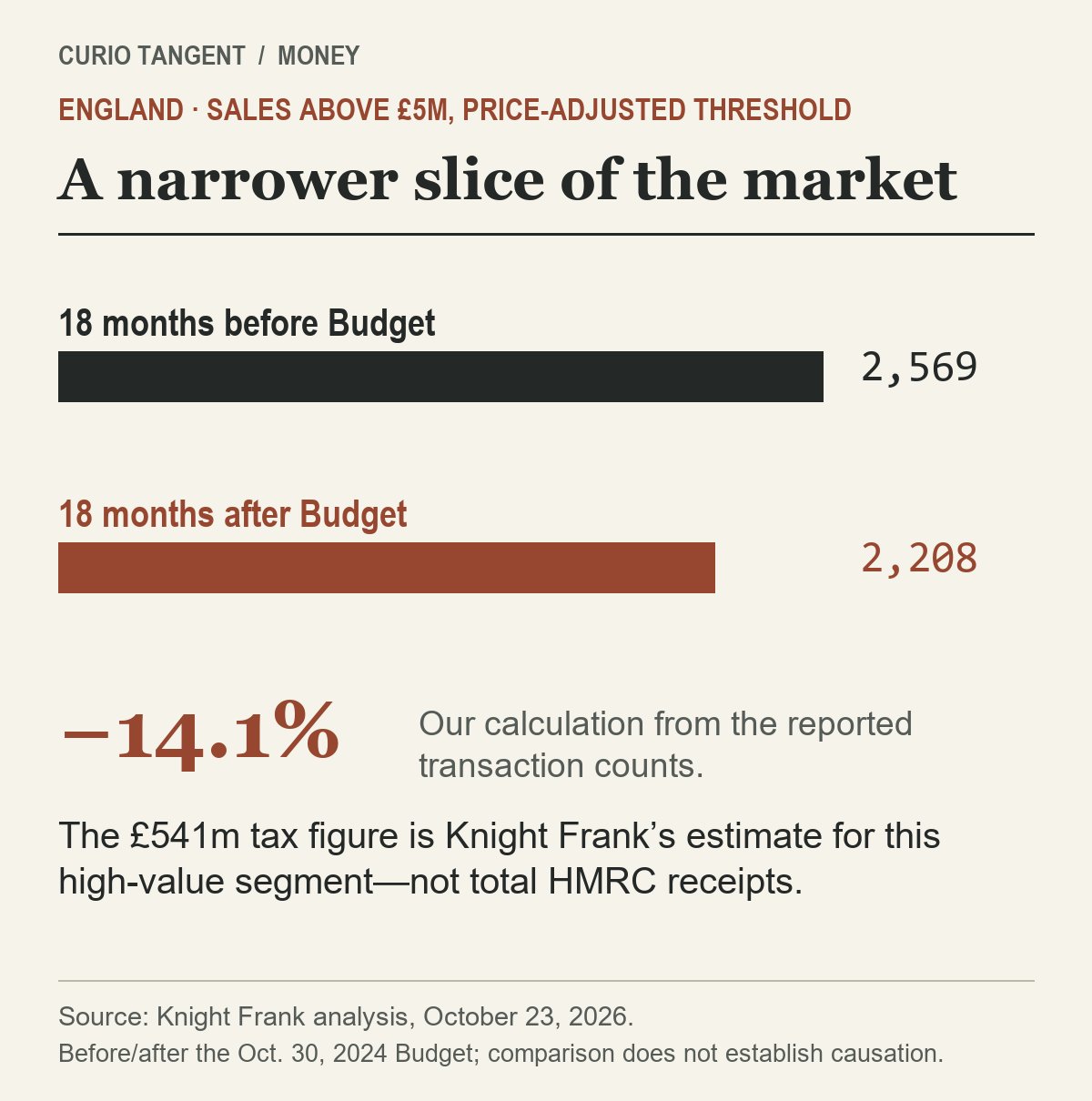
In an October 23 analysis, property adviser Knight Frank estimated a £541 million reduction in stamp duty on English home sales above £5 million, comparing the 18 months before and after the October 30, 2024 Budget. It reported 2,208 transactions versus 2,569 after adjusting the threshold for price movements.
The estimate uses assumptions about the proportion paying additional-property and overseas-buyer surcharges. It is not an HMRC announcement that total stamp duty receipts across all homes fell by £541 million. The analysis comes from a property business, and the before-and-after comparison alone does not establish how much of the change was caused by tax policy.
That still makes the discussion relevant: a transaction tax affects the money needed to complete a purchase. But a claim about the high-end market should not be substituted for a buyer’s actual bill.
Stamp duty is charged in slices
Under HMRC’s standard residential rates, the first £125,000 is taxed at 0%. The next £125,000 is taxed at 2%; the slice from £250,000 to £925,000 at 5%; the next slice up to £1.5 million at 10%; and the remainder at 12%.
The rate on the highest slice is not applied to the entire price. For a £400,000 purchase at standard rates, the calculation is £0 on the first £125,000, £2,500 on the next £125,000 and £7,500 on the remaining £150,000. Total: £10,000.
| Slice of a £400,000 price | Rate | Tax on that slice |
|---|---|---|
| First £125,000 | 0% | £0 |
| Next £125,000 | 2% | £2,500 |
| Remaining £150,000 | 5% | £7,500 |
| Total | — | £10,000 |
These standard residential thresholds took effect on April 1, 2025. They are the current published rates checked for this article, rather than a new tax change announced with this week’s market analysis.
One price, three buyer profiles
First-time buyers can qualify for relief when all buyers meet the conditions, the property will be their main residence and the price is no more than £500,000. HMRC’s relief guidance sets a 0% band on the first £300,000 and 5% on the remainder up to £500,000. Above £500,000, that relief is unavailable.
On the £400,000 example, a qualifying first-time buyer pays £5,000: 5% of £100,000. A buyer paying standard rates pays £10,000. A buyer subject to the additional-property rates pays £30,000: the standard £10,000 plus five percentage points across the £400,000 price, adding £20,000.
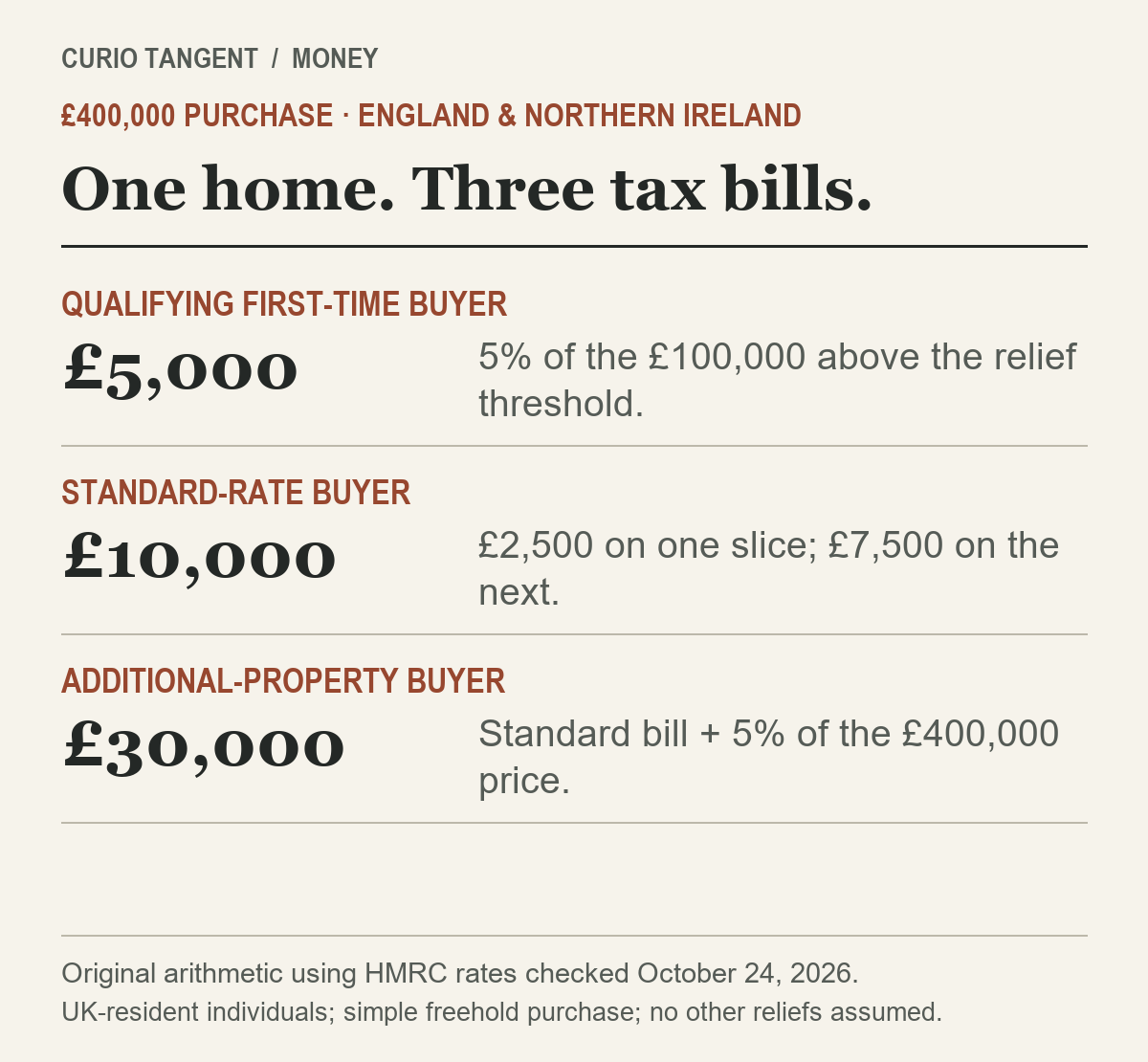
All three examples assume UK-resident buyers for SDLT purposes, no other reliefs and a simple freehold transaction. The gap comes from the buyer’s tax position, not a different property price. That is why a house listing cannot tell every potential buyer the final tax cost.
Additional property and overseas status need separate checks
The higher-rates rules generally add five percentage points when an individual buys an additional residential property and the conditions apply. Replacing a main residence can produce a different result from retaining the old home as an investment. Where the previous main home is sold after the new purchase, a higher-rates refund may be possible if the conditions and deadlines are met.
Do not assume that owning a property abroad is irrelevant, or that being a first-time buyer in England means someone has never owned a home elsewhere. MoneyHelper’s guide explains the importance of previous ownership and joint buyers’ circumstances when considering first-time-buyer relief.
There is also a separate non-UK-resident SDLT surcharge, generally two percentage points on qualifying residential transactions. SDLT has its own residence test; nationality alone does not settle it. Where the surcharge applies across a £400,000 price, it adds £8,000. It can apply alongside the additional-property rates, so it should be checked separately.
Build the completion budget before exchanging contracts
Stamp duty is a purchase cost to budget alongside the deposit, legal work and other charges. A percentage deposit does not tell a buyer how much cash is needed for the whole transaction. Keep the tax calculation as its own line, with the assumptions written next to it.
HMRC’s filing guidance says a return is usually due within 14 days of the effective transaction date, commonly completion, even in some cases where no tax is payable. The tax-payment deadline is generally the same. A solicitor or conveyancer often handles the process, but the buyer should confirm the amount, submission and payment.
Use the official SDLT calculator with the actual purchase details, then have the conveyancer check the result. Mixed-use property, leases, companies, trusts and unusual ownership arrangements need more than the simple examples here.
For a separate look at how one-time fees and recurring payments affect borrowing decisions in the United States, read our mortgage executive order explainer. The jurisdictions differ; the budgeting habit of separating the costs is useful in both.
Sources and method
Rates and eligibility conditions come from the linked HMRC guidance, cross-checked with MoneyHelper. The high-value-market figures are attributed to Knight Frank. Curio Tangent calculated the £400,000 examples independently. All amounts are pounds sterling. Checked October 24, 2026; check for subsequent changes before a transaction.
Prepared with AI assistance; sources and calculations were checked against the linked material. No independent human tax review is claimed.