News & Trends / Europe / Space policy
Europe’s Astronaut Launch Plan: What the €10 Billion Proposal Would Mean
Europe’s astronaut launch plan is back in the news ahead of a December meeting in Rome. The central idea is ambitious: give Europe its own way to launch astronauts and return them from space. The immediate reality is narrower. Governments are considering options; a €10 billion proposal is not the same thing as an approved, operational transport system.
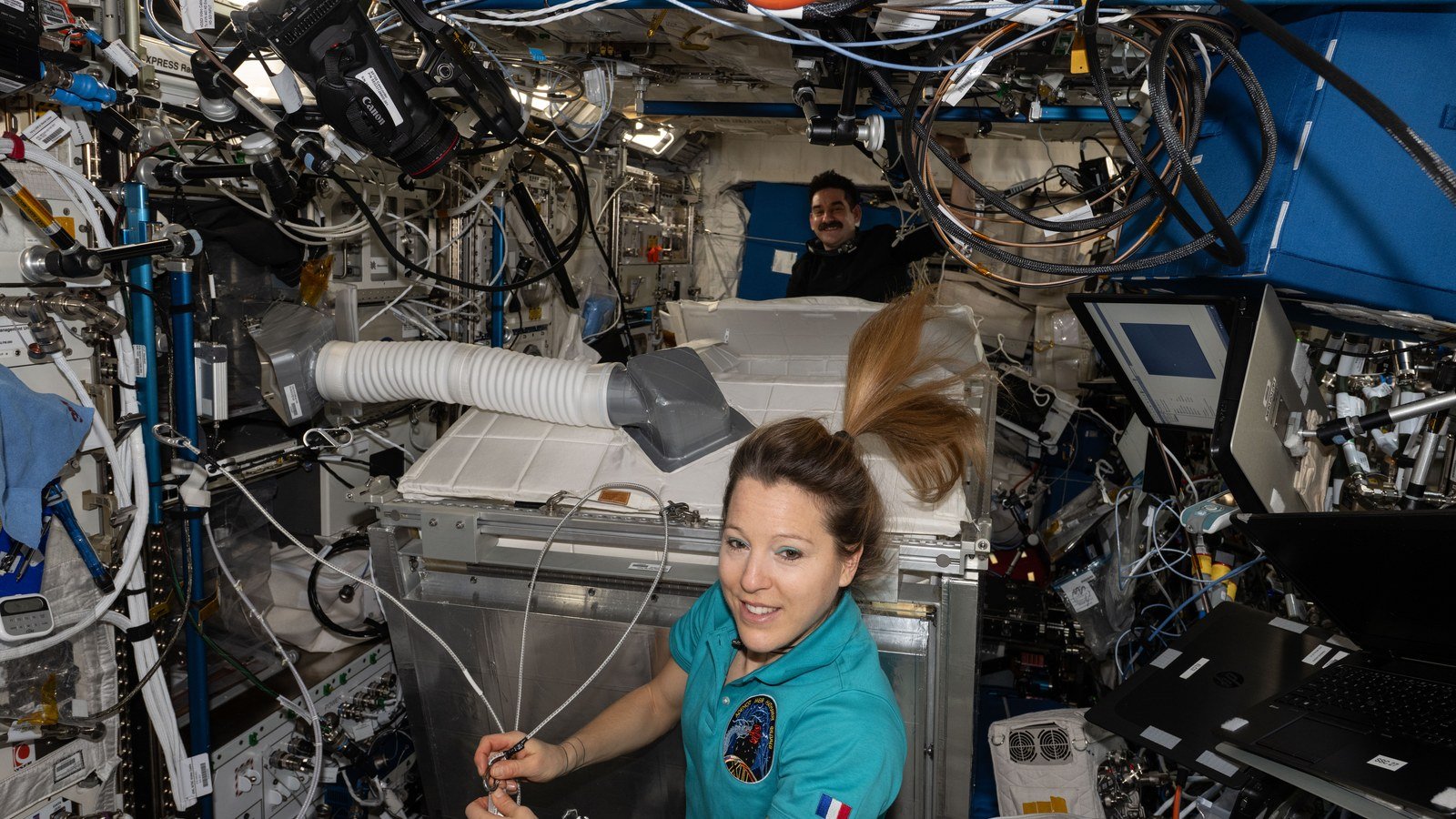
Euronews reported on the proposal on October 26. The underlying political discussion is older. ESA Director General Josef Aschbacher outlined the spending idea in September, and ESA’s latest Council statement sets out a sequence of decisions extending beyond this year.
Europe’s astronaut launch plan: a proposal with a decision process
In a September 23 interview with El País, Aschbacher proposed spending €10 billion over ten years so Europe could launch its own astronauts. He contrasted that with an estimated €5 billion paid to other providers if Europe did not develop the capability. Those are his proposed investment and alternative-cost estimates, not independently audited forecasts or appropriated funds.
The figures should not be turned into a simple price comparison. Buying rides and developing an enduring capability purchase different things. Before calling one “cheaper,” a reader would need to know the number of missions, the services included, the timing of expenditure and the responsibilities retained by the customer. The interview’s two headline numbers do not supply a complete accounting model.
For that reason, this article does not draw a savings bar chart or calculate a per-astronaut ticket price. Neither follows reliably from dividing the announced totals by an assumed number of passengers.
What ESA has actually said this month
ESA’s October 22 Council release says delegates discussed the Director General’s proposal for Europe’s future in exploration at their October 21–22 meeting in Paris. It describes a scalable approach linking low Earth orbit, the Moon and Mars, combining greater autonomy with international cooperation.
The same release calls the December meeting a step toward programme and financial decisions at the 2028 ministerial meeting, while allowing early preparation within existing financial envelopes. That distinction is significant: preparatory activity, political direction and a fully financed development programme are different milestones.
Read “discussed” and “will consider” carefully. They do not mean that a vehicle has been selected, that the full proposed spending has been committed or that a launch date has been guaranteed. None of those conclusions is established by the Council release.
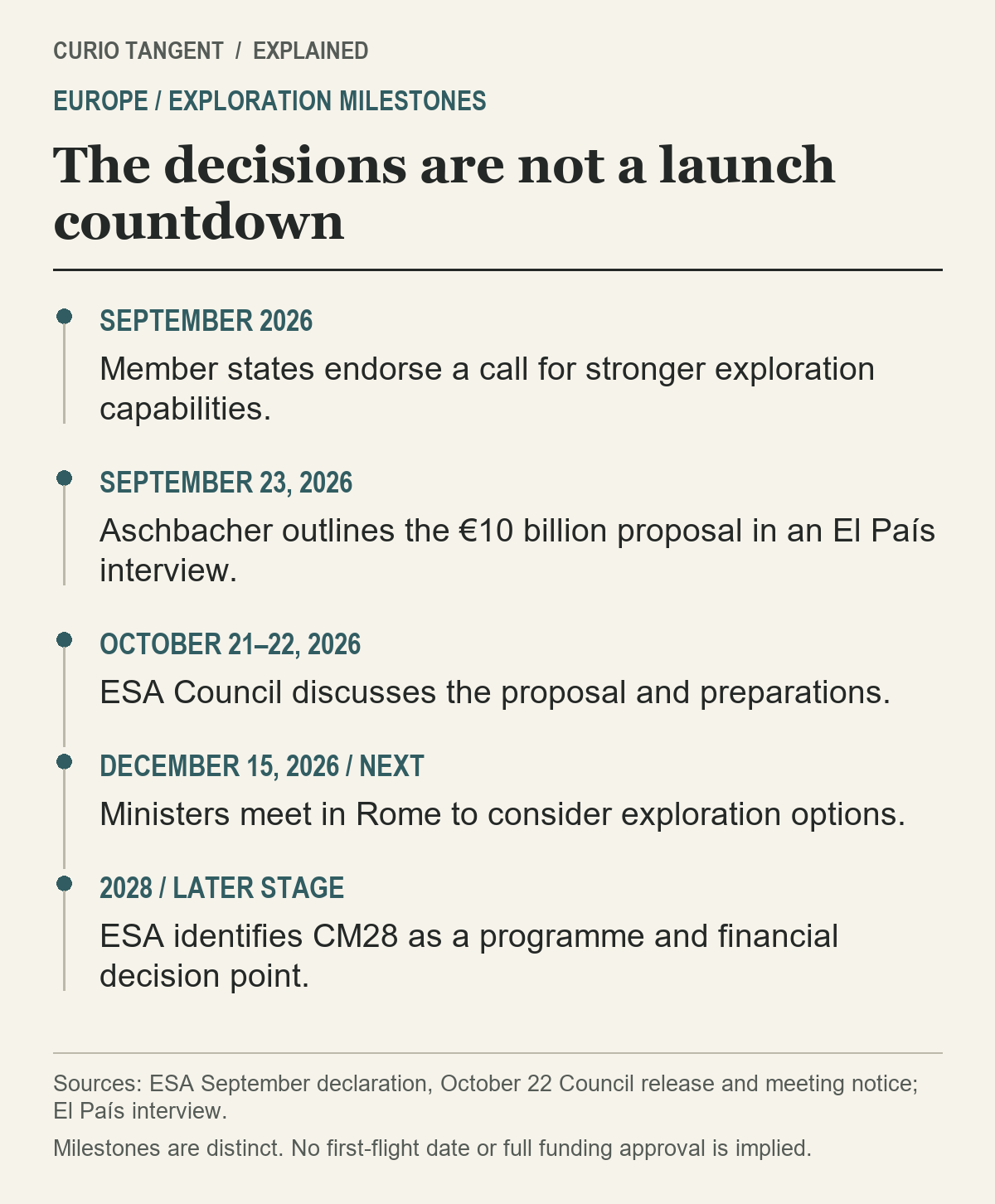
The timeline separates the interview, the October Council discussions and the upcoming ministerial meeting. It does not present a ten-year proposal as a countdown already running from an agreed start date.
What happens in Rome on December 15?
ESA’s meeting notice confirms that the Intermediate Ministerial Meeting will take place in Rome on December 15, 2026. The notice was issued October 5 and updated October 23. Its agenda concerns European exploration options, access to low Earth orbit after the International Space Station, and a role around the Moon and eventually Mars.
The stated aim combines autonomy with strong international partnerships. This is not a notice that Europe is leaving every existing partnership, nor an announcement that an independent crew launch has already been booked.
For a reader following the next update, the useful questions are concrete. Which option did ministers endorse? What money was committed, on what timetable? Which decisions remain for 2028? A statement of strategic ambition and a signed development commitment deserve different headlines.
Europe already has a substantial research presence in orbit
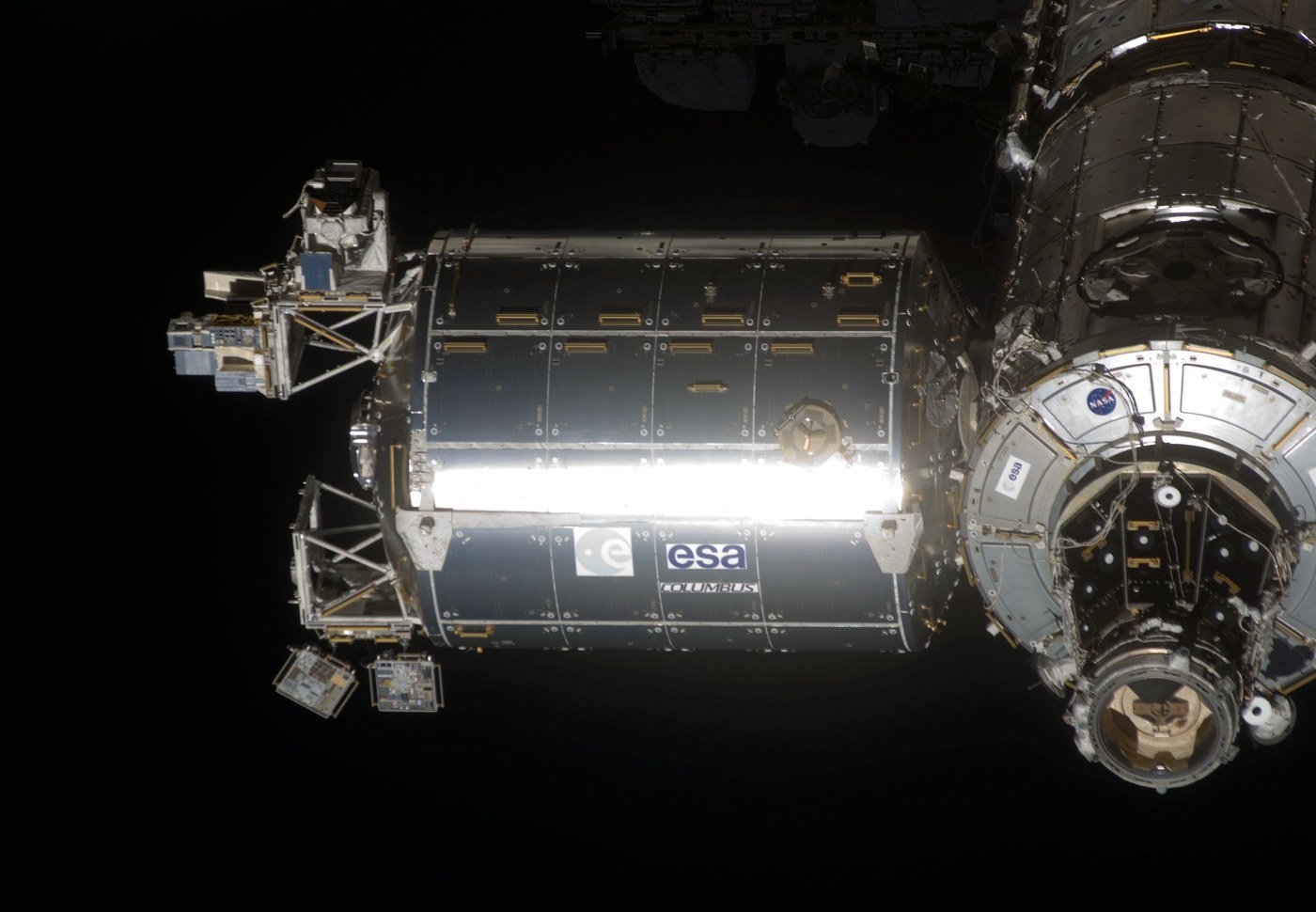
The debate is about transport capability, not whether Europeans have done work in space. ESA describes Columbus as its largest single contribution to the International Space Station and the first permanent European research facility in space. Its internal research racks and external platforms support a range of experiments.
That supplies a useful distinction: a laboratory, access to a laboratory and the means of transporting a crew are related but separate capabilities. Having one does not automatically establish all the others. The photographs here show the existing research environment, not a newly unveiled European crew capsule.
For context on another programme’s separate development steps, our earlier Artemis III update follows NASA’s Earth-orbit testing plans. The two stories should not be collapsed into a single launch timetable or treated as identical engineering projects.
Autonomy does not have to mean isolation
The September call endorsed by ESA member states frames exploration as both a strategic capability and an international effort. It identifies competitive European astronaut transport as a way to strengthen access and the industrial base, alongside partnerships and a commercially viable exploration ecosystem.
Those are policy objectives. They are not evidence that the proposed programme will achieve a particular cost, launch cadence or commercial return. The document helps explain why governments might want a capability; subsequent decisions and demonstrated performance would be needed to show what they obtained.
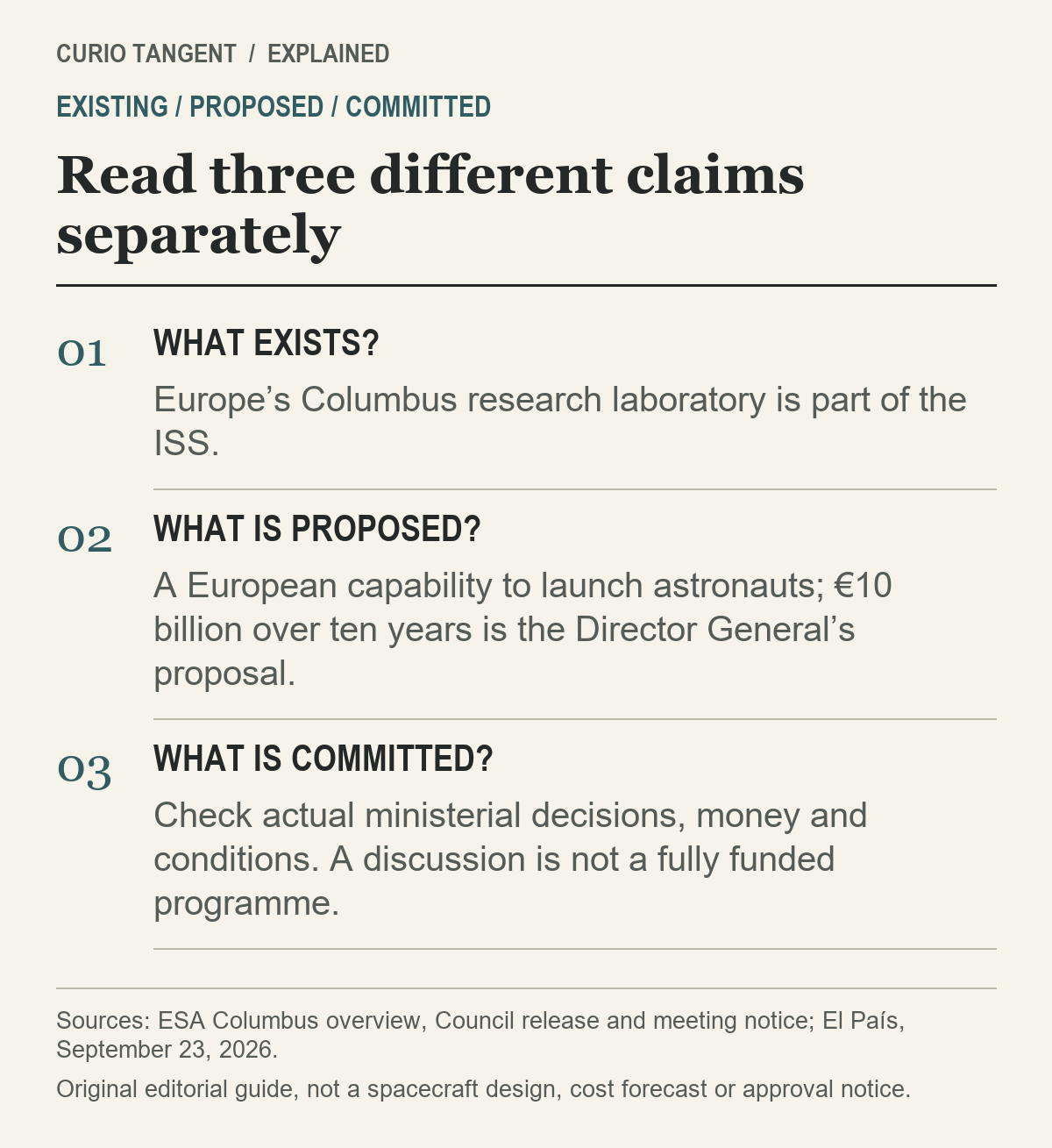
Our reading guide keeps three questions separate: what exists, what is proposed and what has been committed. It is deliberately not a design drawing. A future crew system’s configuration and schedule should come from its actual programme documents, rather than an attractive generic rocket illustration.
The next dated checkpoint is Rome, not a first flight. Until further decisions are published, “Europe weighs an astronaut-launch capability” is the accurate description. Follow today’s other space story with our Hunter’s Moon timing guide, where the date is an astronomical calculation rather than a proposed programme milestone.
Sources and method
Checked October 26, 2026, at 12:05 UTC. ESA’s official documents establish the meeting and decision sequence; the original El País interview supplies the attributed cost proposal, and today’s Euronews report supplies the renewed news context. Archive images are not photographs of a new spacecraft or the coming meeting. Diagrams are original editorial guides. Prepared with AI assistance and source verification; no interview, attendance or independent cost audit is claimed.